

When choosing a barcode reader, you need to think about how you will use it. One key consideration is a wired connected reader or a wireless reader. In general, wireless readers are more versatile, but more expensive and need to be kept charged. So, for instance do you want to use it also for a stock check around the store, do you have large items, if so then a wireless scanner is for you. Do you only ever want to scan small items at the point of sale, then perhaps a wired reader would suit your needs.
|
Wired |
Wireless / Bluetooth |
||
| Pros | Cons | Pros | Cons |
| Lower Cost | Limited range by the length of the cable | Highly Portable | Higher Cost |
| Highly reliable | May be difficult to scan very large items | Great for mobile | Needs charging separately |
| Does not need charging | Cannot use in a mobile set up | Easily scan any size of item | Could run out of power if not charged |
1D and 2D barcode scanners
1D (one dimensional) barcodes are the traditional barcodes you see on products that look like this. They can be read by 1D laser scanners. This is the vast majority of retail scanning today. 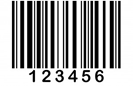
2D (two dimensional) barcodes. There are a variety of 2D format but the most common being the QR (Quick Responsive) code. A QR code can hold a lot more data than a traditional 1D barcode. They are used on tickets and marketing to point to web sites for example.

Most standard retail environments will be fine using 1D scanners. However, if you have a loyalty application for example that uses a 2D code, or think you might in the future, then you will need a 2D scanners.
2D scanners are typically more expensive than a 1D laser scanner. The reason is that 2D scanner use imagers. That is, they take a picture of the code and interpret it with software. It used to be the case the 2D scanner were slower than 1D scanners, but this is less of the case today.